Why Is There Condensation Between My Window Panes in Denver, CO? Failed Seals, Foggy Glass & Replacement Options

Condensation or fogging between the panes of a double-pane or triple-pane window usually means the insulated glass seal has failed.
Once that seal breaks, moisture can enter the space between the panes and create a cloudy, hazy, or wet appearance that cannot be wiped away from either side of the glass.
For Denver homeowners, a failed window seal does not always mean the entire window must be replaced. In some cases, the insulated glass unit can be replaced while keeping the existing frame.
However, if the window is older, drafty, difficult to operate, damaged, or no longer energy efficient, full window replacement may be the better long-term solution.
Clearly Windows & Doors Colorado helps homeowners determine whether foggy windows can be repaired or whether complete window replacement makes more sense.
What Causes Condensation Between Window Panes?
Modern double-pane and triple-pane windows are built with multiple layers of glass separated by a sealed space.
That space helps improve insulation and reduce heat transfer through the window.
When the seal around the insulated glass unit begins to fail, outside air and moisture can enter between the panes.
Common causes of failed window seals include:
- Age and normal wear
- Expansion and contraction caused by temperature changes
- Prolonged exposure to direct sunlight
- Improper installation
- Frame movement
- Water intrusion around the window
- Deteriorated sealant
- Damage to the insulated glass unit
Denver's climate can place additional stress on window systems because temperatures can vary significantly throughout the year.
Repeated heating and cooling cycles cause window materials to expand and contract, which can contribute to seal deterioration over time.
Once moisture gets between the panes, homeowners may notice fogging, streaking, haze, or visible droplets inside the glass.
Does Fog Between the Glass Mean the Window Seal Has Failed?
In most cases, yes.
If condensation appears on the inside surface of the window and you can wipe it away, the issue may simply be indoor humidity.
If condensation forms on the outside surface of the glass, weather conditions may be responsible.
But when moisture appears between the panes of glass, the insulated glass seal has typically failed.
Common signs include:
- Fogging that cannot be wiped away
- Cloudy or hazy glass
- Water droplets between panes
- Mineral deposits inside the glass
- Reduced visibility
- One window looking noticeably different from nearby windows
A failed seal also means the window may no longer provide the same insulating performance it once did.
Can a Failed Window Seal Be Repaired?
The answer depends on what part of the window has failed.
In many cases, the entire window does not need to be removed. If the frame, sash, hardware, and surrounding structure remain in good condition, the insulated glass unit may be replaced.
An insulated glass unit, often called an IGU, includes the sealed glass assembly inside the window frame.
Replacing the IGU can restore:
- Clear visibility
- Insulating performance
- Appearance
- Weather resistance
However, replacing only the glass may not make sense if other parts of the window are also deteriorating.
Older windows may have worn frames, damaged seals, air leaks, failing hardware, or poor energy performance.
That is why the condition of the entire window should be evaluated before choosing between glass replacement and full replacement.

Can You Replace Just the Glass in a Double-Pane Window?
Yes, in many situations.
If the frame is structurally sound and the main problem is a failed insulated glass unit, replacing the glass may be possible without replacing the complete window.
This can be a good option when:
- The window frame is still in good condition
- The window opens and closes properly
- There are no major drafts around the frame
- The window is relatively modern
- Only one or two insulated glass units have failed
Glass-only replacement can sometimes extend the useful life of the existing window.
However, if the frame is deteriorating or the window has multiple problems, replacing the entire unit may provide better long-term value.
Why Window Seals Fail in Denver's Climate
Colorado weather can be demanding on exterior building materials.
Windows in the Denver area may experience:
- Strong sunlight
- High UV exposure
- Cold winter nights
- Warm daytime temperatures
- Rapid temperature swings
- Snow and ice
- Dry air
- Seasonal storms
These conditions can cause glass, frames, sealants, and other window components to expand and contract repeatedly.
Over time, that movement can weaken the edge seal around an insulated glass unit.
South- and west-facing windows can sometimes experience more heat exposure because they receive stronger afternoon sunlight.
Windows exposed to frequent moisture or improper drainage may also experience accelerated deterioration.
Does a Failed Window Seal Reduce Energy Efficiency?
Potentially.
The sealed space between panes is one of the features that helps insulated windows slow heat transfer.
Many insulated glass units contain air or insulating gases such as argon between the panes.
When the seal fails, the insulating environment inside the glass unit can become compromised.
Homeowners may notice:
- Colder glass surfaces during winter
- Warmer interior glass during summer
- Increased drafts
- Higher heating or cooling demand
- Rooms that feel less comfortable
- More noticeable temperature differences near windows
One failed window may not dramatically change an entire home's utility bill, but multiple failed windows can contribute to reduced overall efficiency.
Should You Replace a Foggy Window If It Is Still Working?
Not necessarily.
If the frame is in good condition and the window still operates properly, replacing the insulated glass unit may solve the immediate problem.
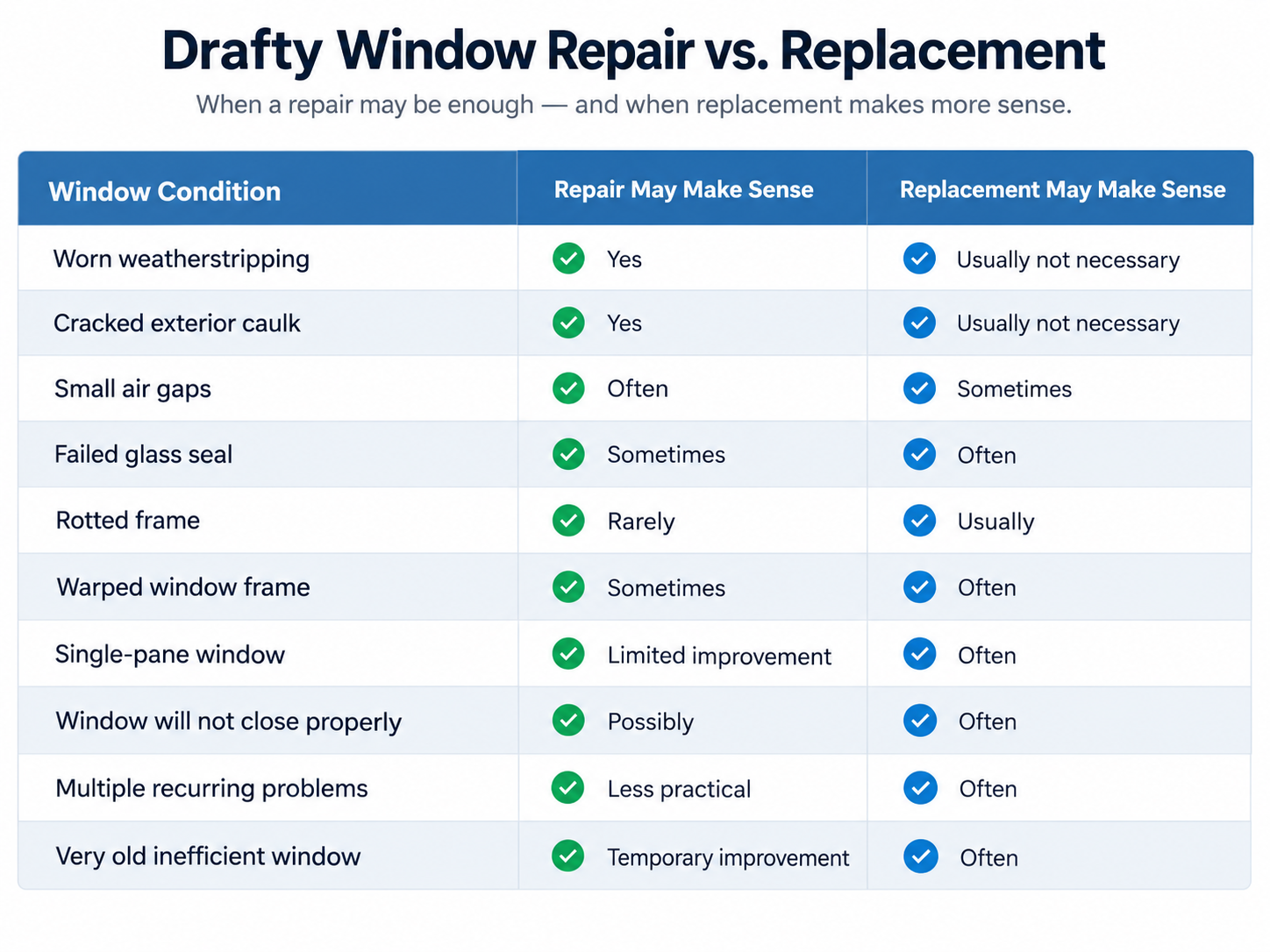
Full replacement becomes more attractive when the window has several issues at the same time.
For example, replacement may make more sense when a window is:
- Foggy
- Drafty
- Difficult to open
- Difficult to lock
- Damaged around the frame
- Showing signs of water intrusion
- Older and inefficient
A window that has only one isolated glass failure may be repairable.
A window with multiple age-related problems may be approaching the end of its useful life.
How Do You Know When It Is Time to Replace the Entire Window?
Consider full window replacement when the window has problems beyond failed glass.
Signs may include:
Persistent Drafts
Air leaking around the sash or frame can make rooms uncomfortable and increase heating and cooling demand.
Difficult Operation
Windows that stick, bind, refuse to stay open, or are difficult to lock may have worn or damaged components.
Frame Damage
Rot, warping, cracking, or water damage can affect the structural integrity of the window.
Repeated Seal Failures
If several windows from the same installation are developing failed seals, the entire window system may be aging.
Poor Energy Performance
Older windows may lack modern glass coatings, improved framing materials, or higher-performance insulated glass.
Multiple Problems at Once
When a window is foggy, drafty, damaged, and difficult to operate, replacing it may be more practical than performing several separate repairs.
Can New Windows Help Reduce Condensation Problems?
New windows can reduce some condensation-related problems, but homeowners should understand the difference between interior condensation and condensation between panes.
Condensation between panes is generally associated with seal failure.
Interior condensation is usually related to indoor humidity and surface temperature.
Modern replacement windows may help by providing:
- Better insulating glass
- Improved frame construction
- Low-E glass coatings
- Reduced air leakage
- Better overall thermal performance
Better-performing windows can keep the interior glass surface warmer during cold weather, which may reduce the likelihood of indoor condensation forming on the glass.
However, extremely high indoor humidity can still cause condensation even on newer windows.
Are Foggy Windows Only a Cosmetic Problem?
Not always.
Foggy glass certainly affects appearance, but a failed insulated glass seal may also indicate reduced performance.
Potential concerns include:
- Reduced insulation
- Loss of insulating gas
- Moisture inside the glass unit
- Permanent mineral deposits
- Reduced visibility
- Progressive deterioration
In some cases, the fogging may remain relatively minor for a long time.
In other situations, the appearance may worsen as more moisture enters the unit.
A professional inspection can help determine whether the issue is isolated to the glass or involves the complete window system.
Should I Repair or Replace My Foggy Windows?
The decision usually comes down to three factors:
Condition of the frame:
A solid, properly functioning frame may make glass replacement practical.
Age of the window:
Very old windows may have additional efficiency and performance issues beyond the failed seal.
Number of problems:
A single glass failure may justify repair. Multiple problems may make full replacement more sensible.
There is no single answer that applies to every foggy window.
The most cost-effective solution depends on what has actually failed.
Failed Seals, Foggy Glass & Replacement Options in Denver, CO- FAQs
Why is there moisture between my double-pane windows?
Moisture between double-pane windows usually means the seal around the insulated glass unit has failed, allowing humid air to enter between the panes.
Can condensation between window panes be fixed?
Yes. In some cases, the insulated glass unit can be replaced while keeping the existing window frame.
Do foggy windows need to be completely replaced?
Not always. If the frame and hardware are still in good condition, glass replacement may be enough.
Does a broken window seal affect insulation?
It can. A failed seal may allow insulating gas to escape and moisture to enter, reducing the performance of the insulated glass unit.
How long do insulated window seals last?
Seal life varies based on window quality, installation, sun exposure, weather conditions, and age. Some seals last for decades, while others fail earlier.
Is it worth replacing foggy windows?
It depends on the condition of the entire window. Glass replacement may be worthwhile for newer windows with good frames, while full replacement may be better for older or damaged windows.
Who repairs foggy windows in Denver, CO?
Clearly Windows & Doors Colorado can evaluate foggy or failed insulated glass windows and help determine whether glass repair or complete window replacement is the better option.
Get Help With Foggy or Failed Windows in Denver, CO
If you are seeing condensation, haze, or moisture between your window panes, the insulated glass seal may have failed.
Clearly Windows & Doors Colorado can inspect the window, determine whether the problem is limited to the glass, and help you compare repair with full window replacement.
Whether you have one foggy window or multiple aging windows throughout your home, identifying the actual cause first can help you avoid unnecessary replacement and choose the right long-term solution.
Contact Clearly Windows & Doors Colorado at 970-744-9204 today, to schedule an evaluation for foggy windows, failed window seals, window glass replacement, or replacement windows in Denver, CO.